Skip to main content
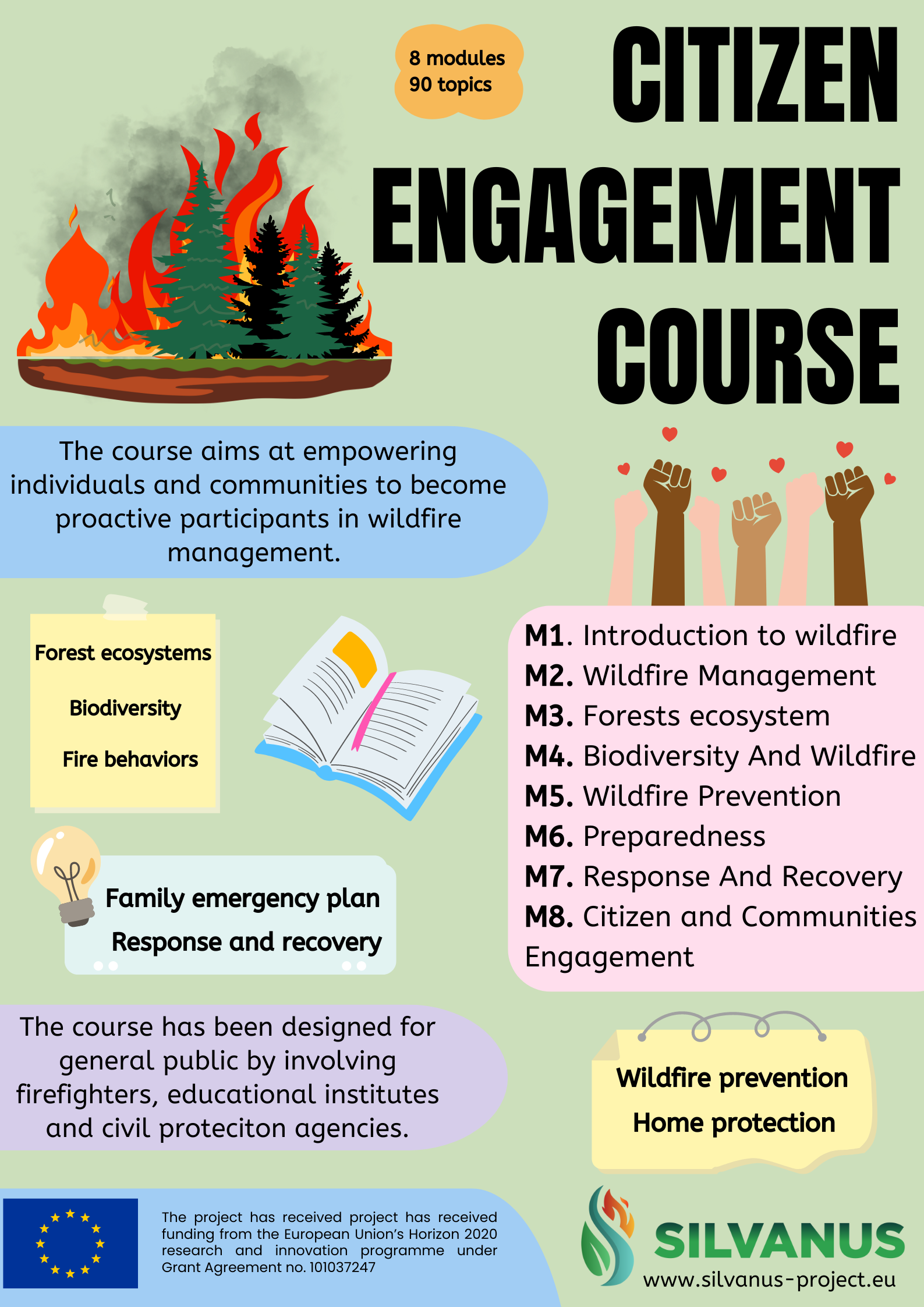
Wildfire - Citizen Engagement Program
English (en)
English (en)
Italiano (it)
Search
Close
Search
Toggle search input
You are currently using guest access (
Log in
)
Citizen Engagement - Wildfire management
Dashboard
Courses
CE
What is this course?
Short introduction
Short introduction
Completion requirements
Last modified: Saturday, 5 October 2024, 11:57 AM
◄ Announcements
Jump to...
Jump to...
Announcements
Introduction
Introduction (Lesson)
1.What is fire? (the triangle of fire)
2.Types of wildfire
3.Types of fuel
4.What is a fire regime?
5.What is “fire behaviour”?
6.Examples of recent significant wildfires worldwide
7.Fire as a natural disturbance and human intervention
8.Impact of Climate Change on Wildfires
9.Economic impact of wildfires
10.Wildfire Impact on Human Well-being and Health
Introduction
1.Wildfire prevention and mitigation methods
2.Wildfire Detection and Monitoring
3.Wildfire suppression techniques
4.Post-Wildfire Recovery
5.Advanced technologies in wildfire management
6.Factors influencing wildfire risk
7.Determinants of wildfire type – Meteorological
8.Determinants of wildfire type – Topographical
9.Determinants of wildfire - Fuel Factors
10.Firefighting Dangers
11.Fire risk map
12.Applications of fire risk maps
13.Controlled (prescribed) wildfires
Introduction
1.What is a Forest
2.Components of a forest ecosystem
3.Forest Recycling system
4.Forest ecosystem services
5.Key threats to forests
6.The interaction between threats
7.Tipping point in a forest ecosystem
8.Examples of Tipping points I forest ecosystems
Introduction
1.Biodiversity in forests
2.Global biodiversity conservation
3.Importance of Global Biodiversity Conservation
4.Examples of Protected Species in European Forests
5.Role of biodiversity in maintaining ecosystem resilience to fire
6.Species promote fire and cause effect on forest ecosystem
7.Species adaptations to fire
8.Strategies for conserving and enhancing forest biodiversity in fire-prone areas
Introduction ►